Getting there
Trains from Luxembourg Gare to Trier Hauptbahnhof run twice hourly and take 50 minutes. The Luxembourg leg is free; you pay for the German section, about €10 return with the DB Regio ticket. Buy at the Luxembourg Gare ticket machines before boarding. Border checks are rare but bring your passport or ID card. Trains are operated jointly by CFL and DB Regio, and the rolling stock is a double-decker RegioBahn set with bike racks near the doors, useful if you plan to rent one at the other end. Check the platform board rather than assuming — some services split at Wasserbillig and the Trier-bound carriage is not always at the front.
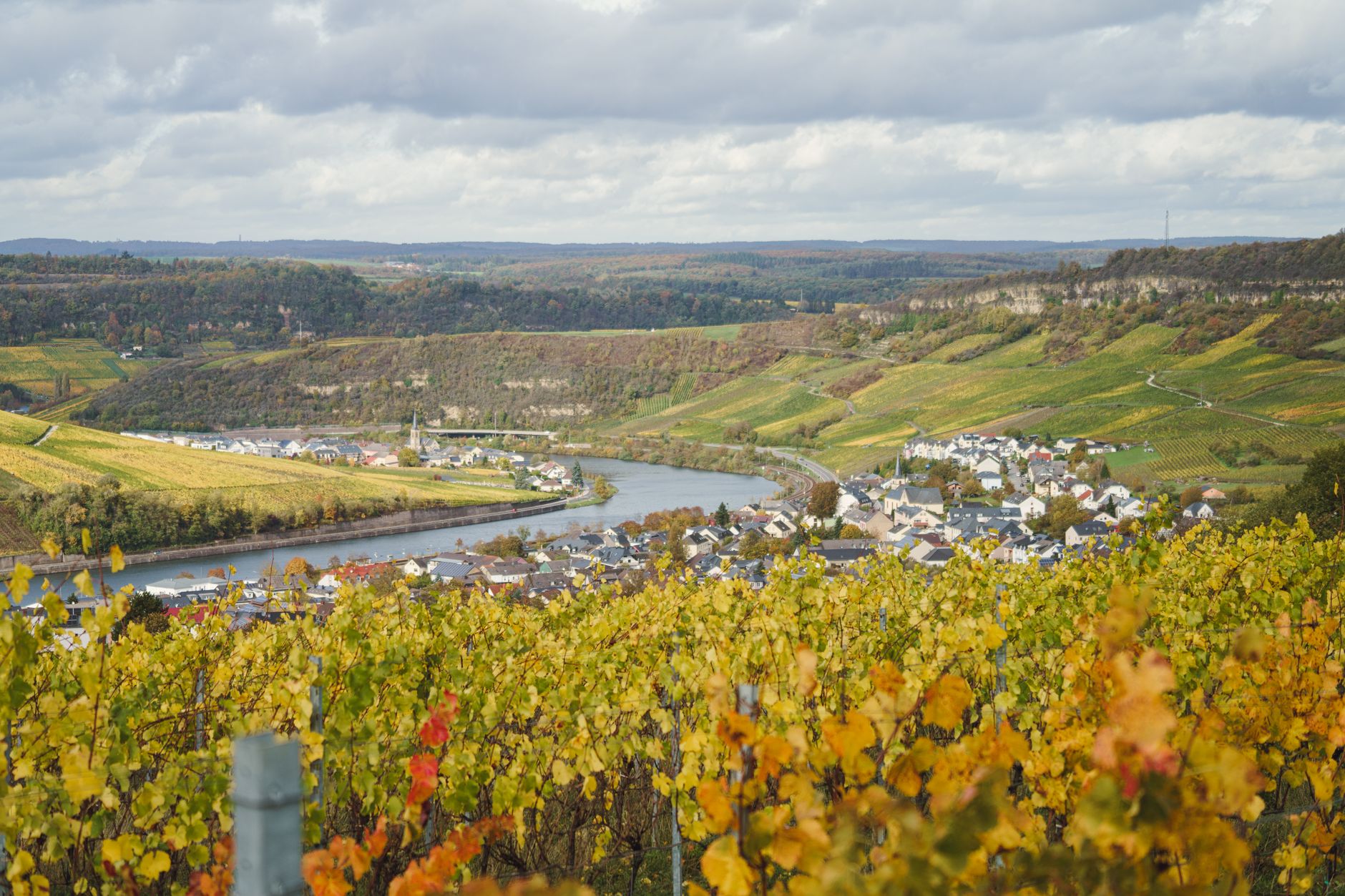
Driving takes about 45 minutes via the A1 motorway and the German A64, and is only worth it if you want to detour through the Mosel villages of Grevenmacher or Wasserbillig on the way. Parking in Trier is cheapest at the P&R near the Europahalle, about €5 for the day, a 15-minute walk from the Porta Nigra. There is no dedicated coach service from Luxembourg City; the train is faster, cheaper and drops you three minutes from the old town gate, so unless you are combining the trip with a Mosel wine-village stop, leave the car in the capital.
The Roman ring
Trier was a Roman capital for 200 years and the UNESCO-listed monuments cluster within walking distance of the station. Start at the Porta Nigra (€4), a 2nd-century blackened sandstone gate. Walk 10 minutes south to the Basilica of Constantine, a colossal brick throne hall from AD 310, free entry. Continue to the Imperial Baths (€4) and the amphitheatre (€4). A combined ticket is €11 and covers all four. Allow four hours. The sites keep slightly different hours by season — most are open 9:00 to 17:00 in winter and until 18:00 April to September, so an early train gets you through all four without a scramble at closing time.
Serious Roman history readers should add the Rheinisches Landesmuseum (€8), a five-minute walk from the Basilica of Constantine, which holds the mosaics and grave goods excavated from the sites you have just walked through and gives context the ruins alone don’t provide. It is not covered by the combined ticket. Budget an extra 45 minutes. If time is tight, skip it rather than the amphitheatre — the amphitheatre’s underground vaults, where animals and gladiators waited before fights, are the more memorable stop and photograph far better than a museum case.
Old town and cathedral
The Hauptmarkt is a picture-book German square with a fountain, timbered houses and the 4th-century Cathedral of St. Peter — the oldest bishop's church in Germany, free entry. The attached Liebfrauenkirche is one of the country's earliest Gothic buildings. Karl Marx was born at Brückenstraße 10, now a museum (€5) run by the Chinese government since 2018. Skip unless you're a completist. The Hauptmarkt itself hosts a produce and flower market most weekday mornings until around 13:00, a decent spot to buy fruit or Mosel apples cheaply if you are self-catering back in Luxembourg.
Two minutes off the square, the Stadtmuseum Simeonstift (€6) occupies a former medieval hospice and covers Trier's history from the Middle Ages onward, filling the gap the Roman museums leave. St. Gangolf, the merchants' church whose tower long outranked the cathedral's in height as a civic dig at the church authorities, is worth a five-minute look from outside even if you don't go in. If you only have energy for one extra stop beyond the cathedral, make it the Simeonstift rather than the Marx house — it is cheaper, less crowded, and tells you more about the city you are actually walking through.
Food and wine
Trier is the capital of Mosel riesling. Weinstube Kesselstatt beside the cathedral serves flights of six wines for around €16 with bread and cheese. Zum Domstein on the Hauptmarkt has a Roman menu based on 4th-century recipes for the novelty (€23 mains). Cheaper: bratwurst and fries at the market food stalls for €7. Last useful train back to the capital is 22:15. Weinstube Kesselstatt also has outdoor tables looking straight onto the cathedral facade, worth requesting even if it means a short wait, and it is the better choice for a wine-focused lunch than Zum Domstein, whose Roman menu is fun once but overpriced for what lands on the plate.
If you want to see the vines rather than just drink from them, the Mosel-Weinwanderweg trailhead starts at Zurlauben, a 20-minute riverside walk from the Hauptmarkt, and the first viewpoint over the terraced slopes is about 30 minutes uphill from there — a good way to burn off lunch before the train back. Bakeries around Fleischstraße sell Trierer Schmandkuchen, a local sour-cream cake, for about €3 a slice if you want something to eat on the platform. Avoid the souvenir-wine shops directly on the Porta Nigra square; the same bottles cost noticeably less at the Kesselstatt cellar door or from the Weinstube itself.
When to go
Trier is at its most crowded in July and August, when coach tours from the Mosel cruise ships fill the Porta Nigra queue by mid-morning; arrive on the first train if you're visiting in summer. The Trier Christmas market runs late November to late December on the Hauptmarkt and is smaller and less overrun than Luxembourg City's own market, making December a genuinely good month for this trip despite the cold. Spring and early autumn give the best combination of light for photographing the Porta Nigra and manageable crowds at the paid sites.
Many of the smaller museums, including the Stadtmuseum Simeonstift, close on Mondays, so avoid building a Monday itinerary around anything beyond the four core Roman sites and the cathedral, which stay open. Winter Sundays can also catch you out: some restaurants around the Hauptmarkt close entirely, so if you're travelling on a Sunday, Weinstube Kesselstatt and the market food stalls are the safer bets for lunch.
Practical notes
There are lockers at Trier Hauptbahnhof (€4–6 depending on size) if you'd rather not carry a bag around the ruins. Free wifi covers the station concourse but not the old town, so download an offline map before you leave Luxembourg Gare if you're relying on your phone. Public toilets are at the Hauptmarkt and beside the Porta Nigra ticket office, both €0.50. Cash machines cluster around the Hauptmarkt; a few smaller stalls at the market still don't take cards.
The whole day trip, including the €10 return train, the €11 combined Roman ticket, a wine flight and a bratwurst lunch, comes to roughly €35–40 per person — cheap enough that it's worth doing even on a short Luxembourg City stay rather than saving it for a longer visit. Pair it with an early train out and the 22:15 back and you have a full eight hours in Trier without needing to book anything beyond the train ticket in advance.
Questions, answered
Do I need a ticket for the Trier train?
Yes, only the Luxembourg section is free. Buy a DB ticket at the machines in Luxembourg Gare, about €10 return.
Is Trier better than Luxembourg City?
Different. Luxembourg has the fortress geography; Trier has Roman ruins on a scale nothing in Luxembourg matches.
How long do I need in Trier?
A full day covers the four major Roman sites, the cathedral and a wine lunch. Half a day is enough only if you skip the amphitheatre and baths.
Can I cross back into Luxembourg by bus?
Yes, bus 117 runs Trier-Echternach hourly and continues to the capital. Slower than the train but scenic through the Sauer valley.
Is the Karl Marx House worth visiting?
Not really. It is a small, curated exhibit run since 2018 by the Chinese government, costs €5, and adds little beyond what a guidebook paragraph tells you. Spend the time and money on the Rheinisches Landesmuseum instead.
What should I skip if I only have half a day?
Drop the amphitheatre or the Imperial Baths, not both — pick whichever you find more visually striking from photographs beforehand. Skip the Karl Marx House entirely and use the saved hour for a wine flight at Weinstube Kesselstatt.
Doing good is the business: every booking through Stay Luxembourg funds one verified tonne of carbon removal — same room, same price, no markup.
Start Your Search