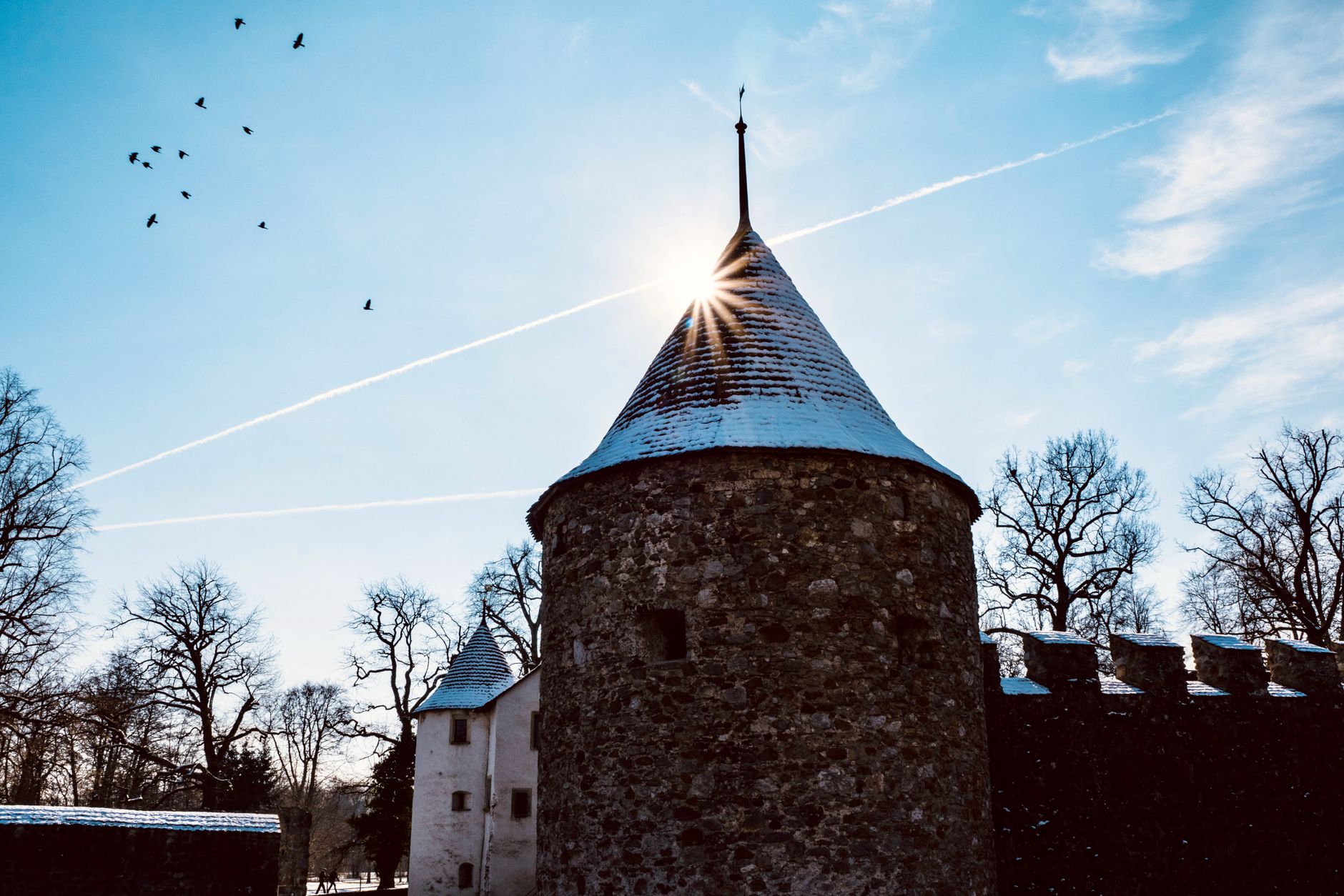
Getting there
Direct train from Luxembourg Gare to Clervaux, one hour, free. The line runs through the Ardennes forest and passes several deep river valleys — grab a window seat on the right heading north. The station is a 10-minute walk from the castle in the valley below. Trains run hourly and connect onward to Liège and Brussels for Belgium-bound travellers. The route is CFL line 10, the same line that continues to Troisvierges at the northern tip of the country before crossing into Belgium at Gouvy. Fares are covered by Luxembourg's free public transport policy, so there's no ticket to buy or validate, only a seat to find before the train fills up on weekend mornings.
Driving takes about an hour from Luxembourg City via the A7 motorway to Ettelbruck, then the N7 north through Wiltz towards Clervaux; parking is free in the gravel lot beside the castle and along Grand Rue. Buses exist but are slower and less frequent than the train, mostly useful for connecting outlying villages like Munshausen or Wilwerdange rather than the direct run from the capital. If you're combining Clervaux with Vianden or Esch-sur-Sûre in one day, a car is the only realistic option, since none of the three sit on the same rail line and cross-connections by bus can add over an hour each way.
The Family of Man
Edward Steichen's 1955 exhibition The Family of Man — 503 photographs by 273 photographers from 68 countries — was gifted to Luxembourg after touring the world. It lives permanently in Clervaux Castle, entry €6, open 12:00-18:00 except Mondays. Allow 90 minutes. The images document birth, work, war and death across cultures in a way that still lands 70 years on. This alone justifies the trip.
Steichen worked on the exhibition for three years at New York's Museum of Modern Art before it toured 37 countries; the version now in Clervaux is the last complete surviving print set, restored in the 1990s after decades of touring took a toll on the photographs. The castle's stone walls and low lighting suit the collection better than a conventional gallery would, and the route through the rooms is one-way, so there is no rushing past the closing sections on war and peace. Photography of the photographs is not allowed, so leave the phone in your pocket and look properly instead.
The castle and abbey
The white castle also houses a model museum of Luxembourg's fortresses and a Battle of the Bulge exhibit — Clervaux was overrun in December 1944 and the town centre was rebuilt after the fighting. Above the town, the Benedictine Abbey of St. Maurice sits on a wooded hill; you can visit the church and monastic shop selling honey and beer for €5-€10 a bottle. Gregorian chant vespers at 18:00 on some days, free. The rebuilding after 1944 took over a decade, and photographs in the castle's own local-history room show the town reduced to rubble before the current stone facades went up.
The model museum shows scale reconstructions of Luxembourg's fortified towns as they looked before later wars stripped most of them down, useful context if you're also visiting Vianden or Bourscheid. The Battle of the Bulge room is small but specific to Clervaux, with maps showing how the defending US infantry held the town for two days in December 1944 before it fell. St. Maurice Abbey, a 20th-century Benedictine foundation rather than a medieval one, opens its church daily from 9:00 to 18:00; the shop keeps shorter hours, roughly 10:00 to 12:00 and 14:00 to 17:00, and closes entirely in January. Buy the beer rather than the honey if you can only carry one bottle back — it travels better.
Eating
Hotel-Restaurant International on Grand Rue serves an €16 plated lunch. Le Claravallis at the top of town does a wood-fired pizza for €12 with a terrace looking down onto the castle. For coffee and cake, the bakery at the entrance to the pedestrian street sells Ardennes tart for €4. Skip the tourist café directly beside the castle; the queues are long and quality is average.
Clervaux's Saturday morning market on Grand Rue, running through spring and summer, sells Ardennes ham, cheese and honey from the abbey along with the usual fruit and veg — a good spot to build a picnic for the walking trails above town. If you want the Luxembourg national dish, judd mat gaardebounen (smoked pork collar with broad beans), Hotel-Restaurant International serves it as a lunch special on weekdays for around €18. Self-caterers can stock up at the small supermarket near the station before the afternoon train back, since there is nothing comparable once you're on the platform.
Hiking around Clervaux
Clervaux sits on the Escapardenne Lee Trail, a long-distance route of around 42 kilometres linking Kautenbach in Luxembourg to La Roche-en-Ardenne in Belgium, and the stretch through the Clervaux valley is one of the most scenic single day's walks on it. From the station, a marked trail climbs steeply through beech forest to a viewpoint above the castle, about 45 minutes up, with the white towers and red rooftops laid out below. Shorter loop walks of two to three hours start from the same trailhead and are signposted in yellow; pick up a paper map at the tourist office beside the castle entrance before setting off, since phone signal drops in the valley.
Serious hikers use Clervaux as a stopover on multi-day Ardennes routes rather than a there-and-back trip; the Escapardenne network has simple gîtes and guesthouses spaced roughly a day's walk apart, though none of the city hotels covered elsewhere on this site are based here, so anyone overnighting should book locally and independently. Casual visitors are better off treating the paths as a half-day add-on to the castle and museum, not a reason to stay over. October and November bring good beech-forest colour and cooler walking temperatures; July and August are busiest and the sole café by the trailhead can run out of tables by early afternoon.
When to go
The Family of Man and castle museums close on Mondays year-round, so build the trip around Tuesday to Sunday. Winter opening (November to March) is shorter, 12:00 to 16:00, and the abbey shop reduces its hours further in January, so a summer visit gets more out of the day for the same train ticket. Snow is common in the valley from December through February, which suits photographers of the castle itself but makes the hillside trails slick underfoot.
Clervaux is at its most crowded on summer weekends when day-trippers from Luxembourg City and Belgium arrive on the same late-morning trains; travelling on a weekday, or catching the first train out around 8:00, avoids both the queue for the castle ticket desk and the lunch rush at Le Claravallis. Public holidays in Luxembourg and neighbouring Belgium can close the abbey shop and reduce restaurant hours without much warning, so it's worth checking before building a whole day around one meal stop.
Nearby villages and onward travel
Troisvierges, three stops further up the same line, marks the northernmost point in Luxembourg and is where the railway crosses into Belgium at Gouvy; it's a 15-minute ride from Clervaux and a reasonable add-on if the castle and museum haven't filled the day. Consthum and Munshausen, both a short bus or taxi ride from Clervaux station, saw heavy fighting in December 1944 and keep small, unglamorous memorials to the American units that held the line, a quieter counterpoint to the exhibits inside the castle.
For a longer Ardennes loop, La Roche-en-Ardenne in Belgium is roughly 90 minutes further by connecting bus and offers its own ruined castle and riverside town, popular with the same hiking crowd using the Escapardenne trail. Coming back the other way, Wiltz — 25 minutes south by train — has its own castle and open-air theatre festival in July, and pairs naturally with Clervaux if you'd rather split the Ardennes into two half-day trips than one long one.
Questions, answered
What is The Family of Man exhibit?
A 1955 photography exhibition by Edward Steichen showing 503 images of the human condition from around the world. It's UNESCO-listed and permanent in Clervaux.
How long is the train from Luxembourg to Clervaux?
One hour direct, hourly, entirely free within Luxembourg.
Is Clervaux worth a day trip?
Yes if you like photography or history. If you only want castles and gorges, Vianden or Bourscheid deliver more drama.
Can I continue into Belgium from Clervaux?
Yes, the same line runs to Liège in 90 more minutes. Belgian trains stop in Gouvy just across the border.
Is Clervaux Castle open every day?
No — both the Family of Man exhibit and the castle's other museums close on Mondays. Winter hours (November to March) also run shorter, from 12:00 to 16:00 instead of 12:00 to 18:00. Plan a Tuesday-to-Sunday visit and check the abbey shop's separate, shorter hours if that's part of the plan.
Can you hike from Clervaux?
Yes, the Escapardenne Lee Trail passes directly through town on its way to La Roche-en-Ardenne in Belgium, and a marked path climbs from the station to a viewpoint above the castle in under an hour. Shorter yellow-marked loops of two to three hours also start at the same trailhead. Pick up a paper trail map at the tourist office, since phone signal is patchy in the valley.
Doing good is the business: every booking through Stay Luxembourg funds one verified tonne of carbon removal — same room, same price, no markup.
Start Your Search